*The rates above are for one term of 9 sessions. Each school year consists of 4 terms.
VIEW THE 2026–2027 ACADEMIC CALENDAR HERE
1. OVERVIEW
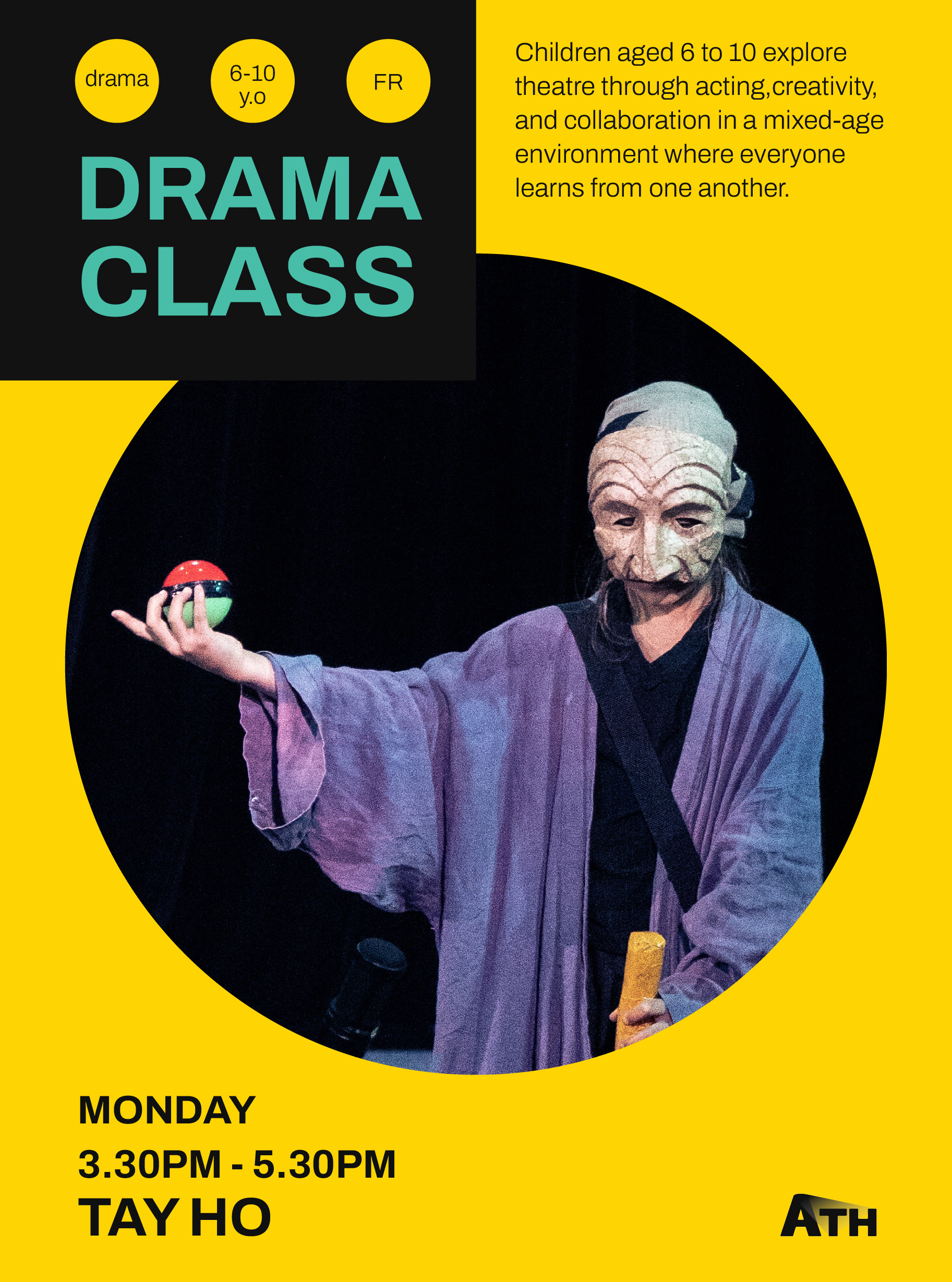
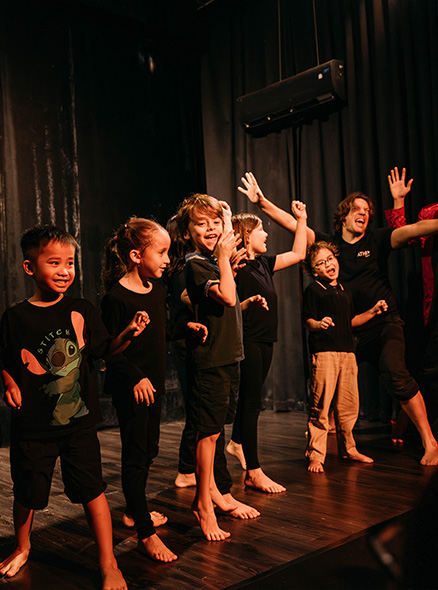
Children aged 6 to 10 explore theatre through acting, creativity, and collaboration in a mixed-age environment where everyone learns from one another. The program introduces the foundations of drama while encouraging imagination, self-expression, confidence, and critical thinking.
Classes combine theatre games, improvisation, movement, voice, character creation, and scene work. As students grow, they progressively take on more complex artistic challenges, developing stronger acting skills, greater autonomy, and a deeper understanding of storytelling and performance.
Working in a mixed-age group creates a rich learning environment where younger children gain confidence by observing older students, while older participants develop leadership, empathy, responsibility, and teamwork by supporting younger members. This collaborative approach strengthens communication, mutual respect, adaptability, and a strong sense of ensemble.
2. OBJECTIVES
Throughout the year, participants will develop the essential foundations of theatre, including acting, improvisation, stage awareness, voice, movement, character development, and collaborative creation. They will also build confidence, creativity, communication skills, emotional awareness, and the ability to work effectively as part of a group.
Students progressively learn to analyze characters and dramatic situations, make artistic choices, and become increasingly independent performers according to their age and experience.
The year culminates in a collective theatrical production presented as part of the P.A.S. Festival. Depending on their age and level, each participant takes on an appropriate level of artistic responsibility, contributing to a performance lasting approximately 20 to 45 minutes, where every child plays a meaningful role in the creation.
3. DISCIPLINE SUMMARY
Theatre as an Exploration of the Self and the World
Practicing theatre means facing personal challenges: launching oneself on stage, managing stage fright, following instincts, and collaborating with others. Theatre encourages creativity, expression, teamwork, and understanding oneself and others.
Classes combine theoretical and practical work based on aesthetic currents and methods from masters worldwide. Emphasis is placed on body awareness, imagination, and collective creation.
"We want life in the theatre, and theatre in life." – Jules Renard
4. SKILLS DEVELOPED
Individual skills:
- Body awareness and movement freedom
- Creative thinking and imagination
- Memory and language skills
- Emotional expression and analysis
- Confidence and self-assertion
Group skills:
- Teamwork and collaboration
- Listening and mutual support
- Collective creativity and empathy
- Sharing and respecting others on stage
5. WHY IT'S IMPORTANT
Theatre promotes self-discovery and critical thinking, exploring personal and social worlds. It allows participants to gain self-confidence, express themselves, and understand diverse perspectives. Theatre is both a playful and profound way to engage with life.
"Theatre is a point of view. Everything that exists in the world… everything must and can be reflected there, but under the magic wand of art." – Victor Hugo